
A dedicated engineering team.
One point of contact.
You deal with one person who speaks your language and knows your business, and you can talk to the engineers directly whenever you want. Together they build and maintain software, run infrastructure, and put AI into the systems you already run.
A team that works as part of yours
Not a project handed over a wall. The engineers join your rituals, your board and your codebase, and stay long enough to know why things are the way they are.
Capacity without a hiring process
Belgian engineering hiring is slow, and for some of these skills the people are not available at all. We already employ them.
- Engineers employed and managed by us, not resold from a bench
- A named person accountable for delivery
- The same people staying with your codebase
- Scale up or down as the roadmap changes
Clear expectations, fast feedback
Remote engineering engagements rarely fail on skill. They fail on unclear expectations and slow feedback. We manage against both.
- One contact, not a coordinator relaying messages
- Documented tickets, estimates and acceptance criteria
- Code review and QA before anything reaches you
- Direct access to the engineers when you want it
What the team covers
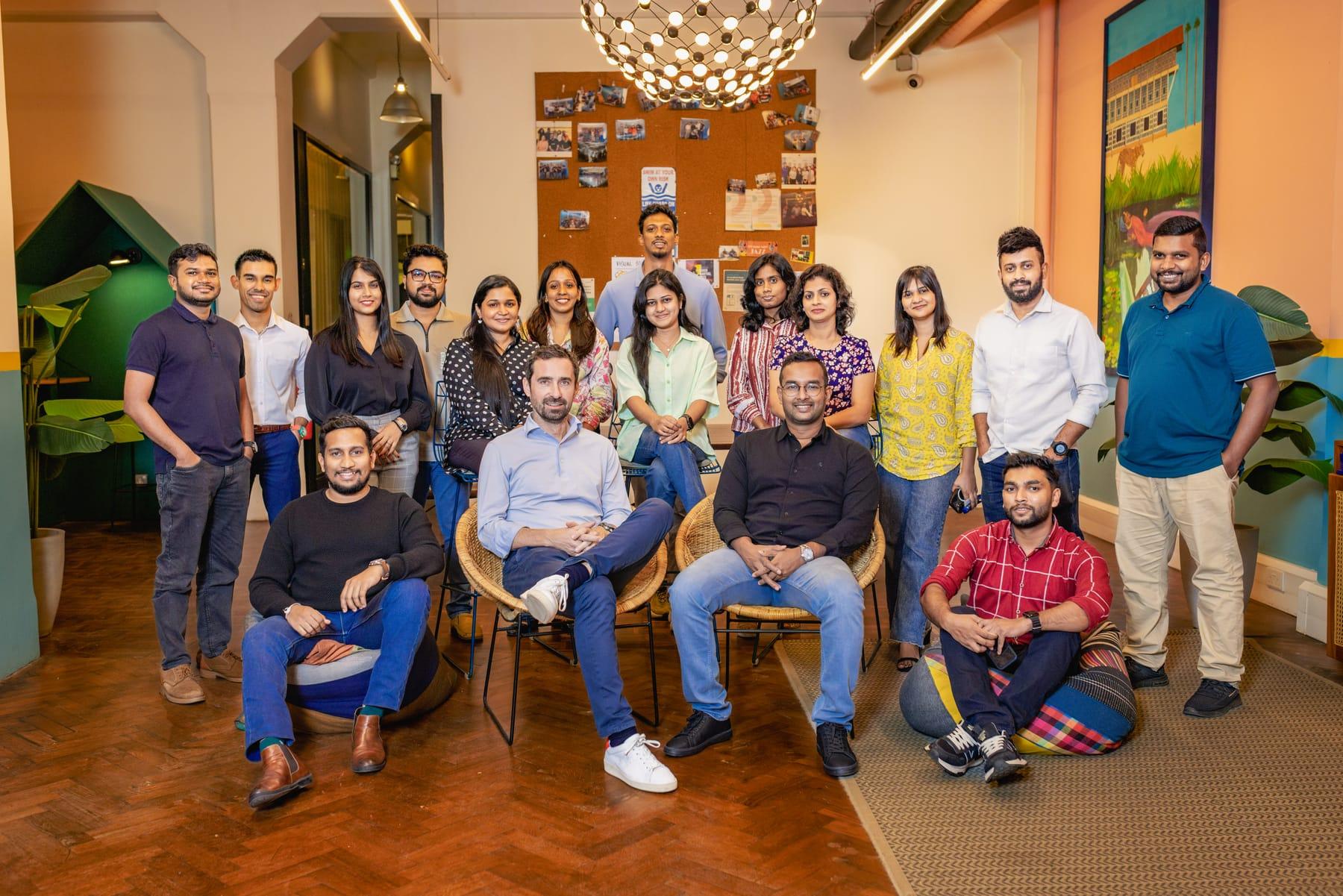
One team in Colombo, across engineering, QA and infrastructure.
Backend and full stack development
C# and .NET, Java and Spring Boot, Python and Node. REST and SOAP integration, relational and NoSQL databases.
AI and data engineering
Production machine learning, LLM applications and retrieval pipelines, wired into real workflows rather than notebooks.
Frontend development
React and modern JavaScript, internal tooling and customer facing interfaces.
QA and test automation
Test design, structured cases and regression coverage, against a documented QA framework.
Infrastructure and support
Windows and Linux servers, MSSQL, VMware, AWS and Azure, Microsoft 365, and ITSM style incident handling.
Every client gets a small, fixed team, and the same people stay on the work:
Business analyst
Closer to a project manager in practice. Owns your business requirements and turns them into work the team can build.
At least two developers
So your system never depends on one person.
QA
Reviews and tests the work before it reaches you.
CTO and General Manager
Oversee every engagement and sign off what ships.
Experts in your systems, not a helpdesk
We are a lean company and we stay close to our clients. The team learns your systems properly, so when something needs fixing you talk to people who already know how it all fits together, not someone who has to start from zero every time.
Start small, then grow it
Nobody should commit to a team of eight on the strength of a website.
Scope call
What needs building, what skills it needs, and how you work today.
Proposed team
Specific people, with their backgrounds. You interview them if you want to.
Trial scope
A first slice of real work, small enough to judge and useful enough to keep.
Grow or stop
If the work is good, we add people. If not, you have lost a small scope, not a year.
The things buyers actually ask
How does the time difference work in practice?
Colombo runs four and a half hours ahead of Belgium in winter, three and a half in summer. Your morning is their afternoon.
The team works flexible hours, so it covers Belgian working hours when the work needs it.
How is this different from hiring developers through an agency?
The people are employed and managed by us, not resold from an agency bench. You deal with one accountable contact, not a coordinator relaying messages. And the team stays with your codebase, so what they learned in month four is still there in month twenty.
The honest version: if you want the cheapest hourly rate on the market, that is not us.
What happens if someone leaves?
People leave everywhere. What protects you is that the work is documented, the code is reviewed by more than one person, and we carry the handover rather than sending you a CV and wishing you luck.
Who owns the code?
If you want to own the code we write for you, you do. We agree it at the start of the work, so there is no question about it later.
How do we know the quality is there?
Every change is code reviewed and goes through QA against a documented framework before it reaches you.
The real test is yours, though: start with a small scope, look at what comes back, and grow the team only if the work is good.
Start with a scope call and one small piece of work
Tell us what needs building or maintaining. We will tell you what the team would look like and what it would cost to find out whether this works.
Book a scope call →